Ashburn’s tree canopy is one of the reasons the area feels so livable. Mature oaks line older neighborhoods near Ashburn Village, young shade trees fill in newer developments off Loudoun County Parkway, and wooded lots back up to plenty of Broadlands and Belmont Country Club properties. That canopy also means Ashburn homeowners deal with real, recurring tree problems: storm-snapped limbs, overgrown branches crowding rooflines, and the occasional tree that simply needs to come down before it becomes a hazard.
Finding dependable tree services in Ashburn, VA, is not just about hiring someone with a chainsaw. It means working with a crew that understands local tree species, knows how Loudoun County’s rules actually apply to residential property, and shows up when a storm has already done the damage. This guide covers what Ashburn homeowners actually need to know before hiring a tree service, along with what Rivera’s Landscaping LLC provides for properties throughout the area.
Why Ashburn Homeowners Need Professional Tree Care
Ashburn sits in a transition zone between the Piedmont and the coastal plain, with clay-heavy soil that holds water after heavy rain and dries out fast during summer dry spells. That combination puts real stress on root systems, especially in newer subdivisions where topsoil was disturbed during construction and trees were planted into compacted fill dirt rather than natural soil layers.
Common Tree Species and Their Challenges
Ashburn properties commonly feature a mix of native hardwoods (oaks, maples, tulip poplars) and ornamental plantings (crape myrtles, flowering pears, dogwoods) added during original landscaping. Oaks and poplars generally hold up well but grow large enough to require regular canopy management near rooflines and power lines. Ornamental pears, particularly the Bradford and Callery varieties planted heavily across Northern Virginia subdivisions in the 1990s and 2000s, are now widely recognized as structurally weak and prone to splitting in wind, which is part of why the Virginia Department of Forestry has been actively encouraging homeowners to remove and replace them through a statewide exchange program.
Storms, Pests, and Seasonal Stress
Northern Virginia’s summer thunderstorm season regularly brings straight-line winds strong enough to snap weak limbs, and the region has also dealt with a sustained emerald ash borer infestation that has killed or severely weakened ash trees across the county over the past several years. A tree that looked fine in spring can become a liability by late summer if it was quietly infested or structurally compromised. Regular inspection and trimming catch these issues before they turn into an emergency removal call.
Our Complete Tree Services in Ashburn, VA
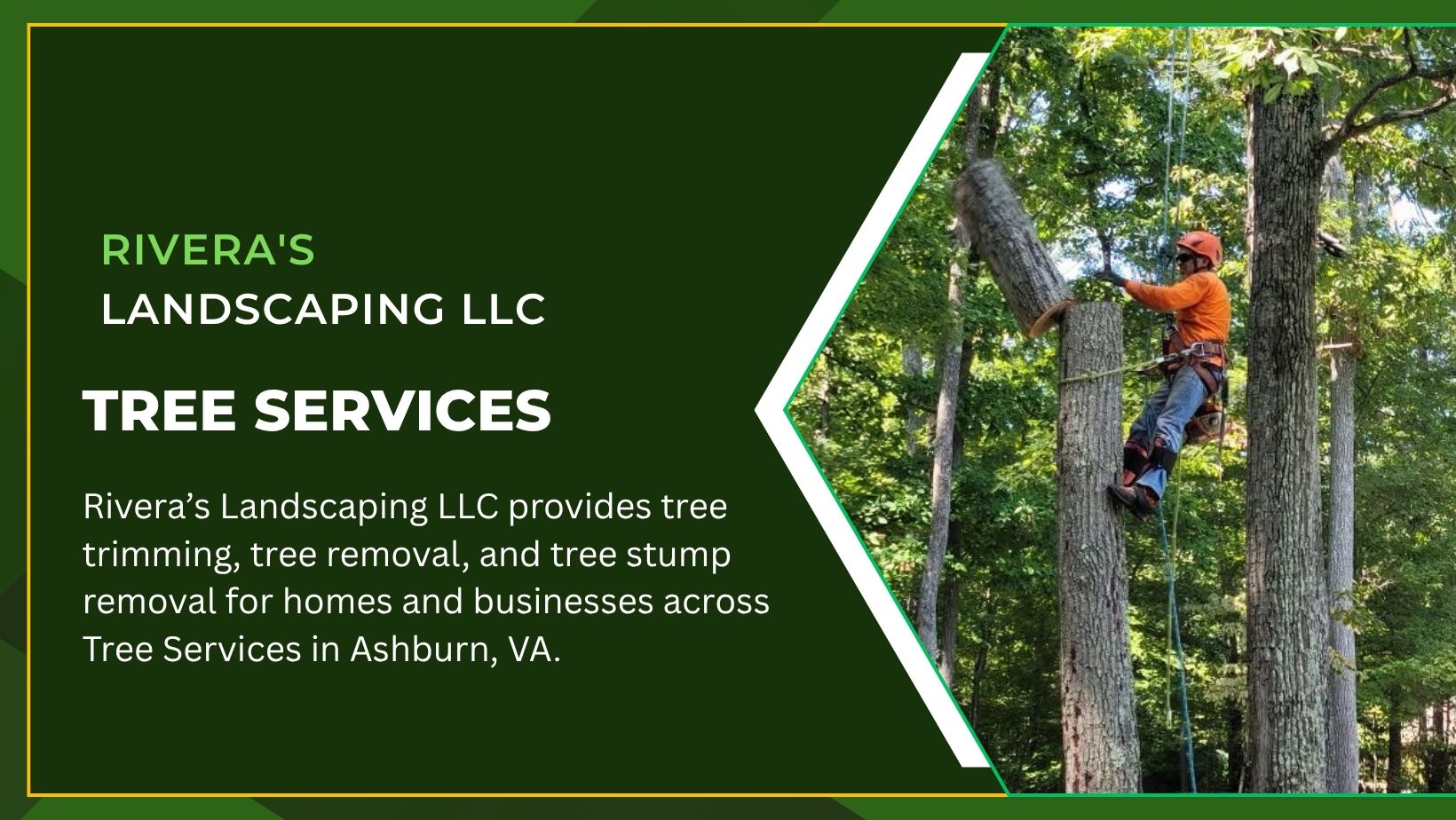
Rivera’s Landscaping LLC provides hands-on tree care for residential and commercial properties throughout Ashburn, built around four core services.
Tree Trimming and Pruning
Routine trimming keeps trees healthy and property lines clear. This includes removing dead or crossing branches, thinning dense canopies so wind can pass through without catching on heavy limbs, and shaping trees away from rooflines, siding, and power lines. Pruning done at the right time of year also reduces stress on the tree and lowers the chance of disease entering through fresh cuts.
Tree Removal
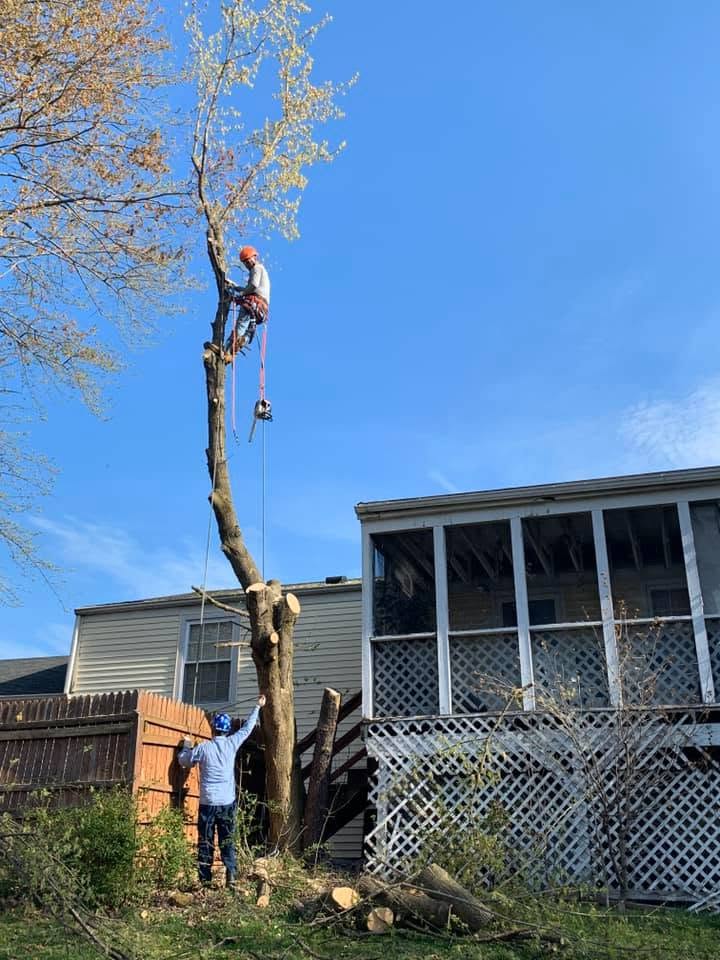
Some trees cannot be saved, whether due to storm damage, disease, root failure, or simple location problems (too close to a foundation, driveway, or utility line). Full tree removal is handled with attention to what surrounds the tree, including structures, fences, gardens, and neighboring property, so the job is done safely without unnecessary damage to the rest of the yard.
Branch Cutting and Canopy Management
Not every job calls for full removal. Selective branch cutting addresses specific hazards, like a limb hanging over a driveway or a branch rubbing against a roofline, without removing a healthy tree altogether.
Storm Cleanup
After high winds or heavy snow, downed limbs and damaged trees need to be cleared quickly, both for safety and to prevent further property damage. Storm cleanup work covers fallen branches, split limbs still hanging in the canopy, and full cleanup of debris left behind after a major weather event.
Signs You Need Tree Trimming or Removal
Most tree problems give some warning before they become an emergency. Ashburn homeowners should watch for:
- Dead or bare branches that stay leafless well into the growing season while the rest of the tree fills in
- Visible cracks or splits in the trunk or major limbs, especially after a storm
- A noticeable lean that developed recently rather than being part of the tree’s natural growth
- Fungus growth or peeling bark at the base, which often signals root or trunk decay
- Branches contacting power lines or the roofline, which is both a safety issue and a common source of storm damage
- Roots lifting the foundation, driveway, or sidewalk, indicating the root system has outgrown the space it was planted in
- Thinning canopy year over year, which can point to pest activity, disease, or root stress that is not visible above ground
Any one of these on its own may not mean immediate removal, but it is worth a professional look before the next major storm rolls through the county.
Tree Removal Laws and Permits in Ashburn (Loudoun County)
This is one of the most misunderstood parts of hiring a tree service, and it is worth getting right before any work begins.
For most Ashburn homeowners, routine removal of a dead or unwanted tree on private residential property does not require a county permit. Loudoun County has not adopted a blanket permit requirement for private residential tree removal the way some neighboring jurisdictions have. However, there are specific situations where approval genuinely is required:
- Resource Protection Areas (RPAs): Properties within roughly 100 feet of a perennial stream, Goose Creek, Broad Run, Sugarland Run, or the Potomac fall under Chesapeake Bay Preservation Act buffer rules, and tree removal in these zones typically requires a Water Quality Impact Assessment before any cutting.
- Trees tied to an approved subdivision or site plan: If a specific tree was designated for preservation on the development plan for your neighborhood, removing it without approval can carry a per-tree penalty.
- HOA architectural review: Many Ashburn communities, including several in Broadlands, Ashburn Village, and Brambleton, require homeowners to submit a request to the HOA architectural review board before removing certain trees, separate from any county requirement.
- Trees connected to an active building permit or renovation project: If removal is tied to construction, an addition, or land disturbance, county review is more likely to apply.
Before scheduling removal, it is worth a quick check with your HOA (if applicable) and a conversation with your tree service about whether your property falls within a protected buffer. A reputable local crew should be able to tell you within a few minutes whether your situation needs any additional approval.
Best Time of Year for Tree Services in Ashburn
Timing matters more than most homeowners expect.
Late fall through winter (dormant season) is generally the best window for major pruning and structural trimming. Trees are not actively growing, sap flow slows down, and cuts heal with less stress on the tree. It is also easier to see a tree’s actual branch structure without a full leaf canopy in the way.
Early spring, right before new growth starts, is a good time for a general health inspection, since winter storm damage and pest activity from the previous season are usually visible by then.
Summer is peak storm season in Northern Virginia, which makes this the busiest time of year for emergency removal and storm cleanup work rather than planned trimming. If a tree already shows warning signs, it is worth addressing before summer thunderstorm season rather than waiting.
Fall is a practical time to deal with Bradford and Callery pear trees specifically, since Virginia’s ongoing pear exchange and removal push makes this a common season for homeowners to swap out weak ornamental pears for sturdier native species before winter ice and wind put additional stress on already fragile limbs.
How Much Do Tree Services Cost in Ashburn, VA?
Tree service pricing varies enough that any company quoting a flat number without seeing the property is likely guessing. That said, a few factors consistently drive cost up or down across the region:
Rather than guessing at a price online, the most accurate way to budget for tree work is a free, on-site quote, which accounts for the actual tree, its location, and current condition rather than a generic estimate.
Why Choose Rivera’s Landscaping LLC for Tree Services in Ashburn
Rivera’s Landscaping LLC is based in Herndon and works throughout Ashburn, Great Falls, Leesburg, McLean, and Reston, providing tree services alongside landscaping, junk hauling, and gutter cleaning for the same properties. That combination matters in practice: a storm that brings down a limb often also leaves debris across the yard and clogs gutters with leaves and branches, and having one crew that can handle the full cleanup saves homeowners from coordinating multiple companies.
Customer feedback backs this up directly. One Ashburn-area client described the team removing eight trees, including two poplars, in under two days, with clear communication throughout the job. Another noted the crew went beyond the original estimate at no extra charge, and a third mentioned a smaller tree removed free of charge as part of a larger job. These are not marketing claims; they are real, publicly posted reviews describing actual completed work.
For homeowners comparing tree services in Ashburn, VA, that track record, combined with a real local address, a direct phone line, and a team that handles both the tree work and the cleanup that follows it, is a practical reason to make Rivera’s Landscaping the first call rather than the third or fourth.
Get Your Free Tree Service Quote in Ashburn, VA
Whether it is routine trimming to keep a tree healthy, a full removal of a hazardous tree, or storm cleanup after a rough night of wind, Rivera’s Landscaping LLC is ready to help Ashburn homeowners handle it safely and correctly the first time. Call (703) 927-9475 or request a quote online to get a straightforward assessment of your property and a clear plan for the work ahead.
FAQ’s
Do I need a permit to remove a tree in Ashburn, VA?
Usually not. Loudoun County generally does not require a permit for routine removal of a tree on private residential property. Exceptions include trees within Chesapeake Bay Preservation Area stream buffers, trees protected under a subdivision plan, or removals tied to an active building permit.
Does my HOA need to approve tree removal in Ashburn?
In many Ashburn communities, yes. HOAs often require a request through the architectural review board before a tree is removed, separate from any county rule. Check your community’s guidelines before scheduling work.
When is the best time of year to trim trees in Northern Virginia?
Late fall through winter, while trees are dormant, is generally best for major structural pruning. Light trimming and hazard removal can happen any time a safety issue appears, especially before summer storm season.
How much does tree removal cost in Ashburn, VA?
Cost depends on tree size, species, accessibility, and condition. A large oak near a house costs more to remove than a small ornamental tree in an open yard. A free on-site quote gives the most accurate number.
What should I do after a storm damages a tree on my property?
Stay clear of any leaning tree or hanging limb and avoid downed lines. Call a tree service for prompt storm cleanup and an assessment of whether the tree can be saved or needs full removal.
Are Bradford pear trees a problem in Ashburn?
Yes. Bradford and Callery pear trees are structurally weak and considered invasive in Virginia. The state has been encouraging homeowners to remove and replace them through a tree exchange program, and many Ashburn properties still have older pears planted from original landscaping.