If you own a home in Ashburn, you already know the drill. One good rainstorm and the weeds take over. One dry August week and the lawn goes patchy. Add in Loudoun County’s clay-heavy soil and the strict landscaping standards enforced by most HOAs in Broadlands, Ashburn Village, or Brambleton, and it’s clear why so many homeowners search for landscaping services in Ashburn, VA instead of trying to manage everything themselves.
This guide breaks down what quality landscaping actually involves in this part of Northern Virginia, how much it typically costs, what to look for in a landscaper, and how to keep your yard looking sharp through every season. Whether you’re dealing with an overgrown flower bed, a lawn that won’t stay green, or you just moved into a new building with a blank slate yard, you’ll find practical answers here.
Why Ashburn Yards Need a Different Approach
Ashburn sits in USDA hardiness zone 7a, which means hot, humid summers and cold, sometimes snowy winters. That swing puts real stress on lawns and plants that aren’t suited to it. The soil throughout much of Loudoun County is dense clay, which drains poorly, compacts easily, and makes it harder for grass roots to establish. A landscaper who doesn’t understand this soil profile will often recommend the wrong grass seed, the wrong fertilization schedule, or the wrong drainage solution, and homeowners end up redoing the work a year later.
Clay soil also behaves differently depending on the season. In summer, it bakes hard and cracks, which makes water run off instead of soaking in. In winter and early spring, that same soil holds onto moisture for far too long, which can drown root systems or create the kind of soggy, compacted patches that never seem to grow grass no matter how much seed gets thrown down. A landscaper who has actually worked properties throughout Ashburn, Broadlands, and the surrounding neighborhoods will usually recommend core aeration before overseeding, and will know which areas of a typical lot tend to hold water longest based on grading rather than guesswork.
There’s also the HOA factor. Communities like Ashburn Farm, Belmont Country Club, and Loudoun Valley Estates have specific rules around lawn height, mulch color, edging, and shrub trimming. Some associations even specify how far mulch beds can extend from the foundation or which plant species are approved near sidewalks and common areas. A local landscaping company that regularly works in these neighborhoods already knows the standards, which saves homeowners from violation notices and awkward conversations with the community association. It also means less back and forth explaining your neighborhood’s specific rules to a crew that’s never worked there before.
Core Landscaping Services Ashburn Homeowners Actually Need
Not every yard needs the same thing. A townhome in One Loudoun has very different needs than a half-acre lot in Belmont Country Club. Below is a closer look at the services that come up most often for residential and commercial properties in Ashburn, along with why each one matters more than it might seem at first glance.
Lawn Care ana Mowing
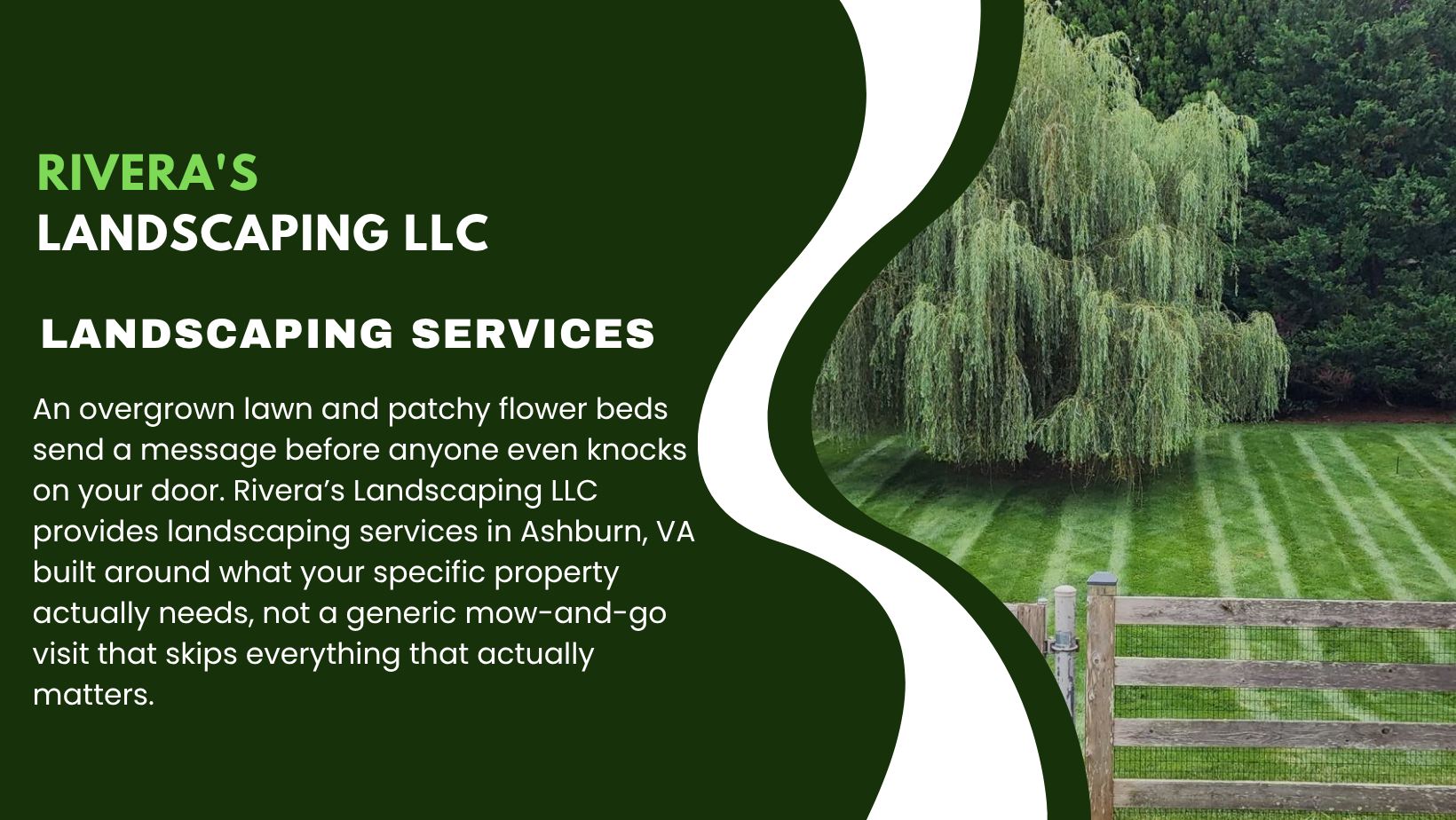
Regular mowing sounds basic, but cutting height, mowing frequency, and blade sharpness all affect how healthy a lawn stays over time. Cutting too short in summer stresses cool-season grasses like tall fescue, which is the most common turf type in this region, and it opens the door for crabgrass and other weeds to move in. Dull mower blades tear grass instead of cutting it cleanly, which leaves ragged edges that turn brown and make an entire lawn look unhealthy even when it isn’t. A good lawn care routine adjusts mowing height and frequency as the seasons change instead of running the same schedule year-round.
Landscape Maintenance
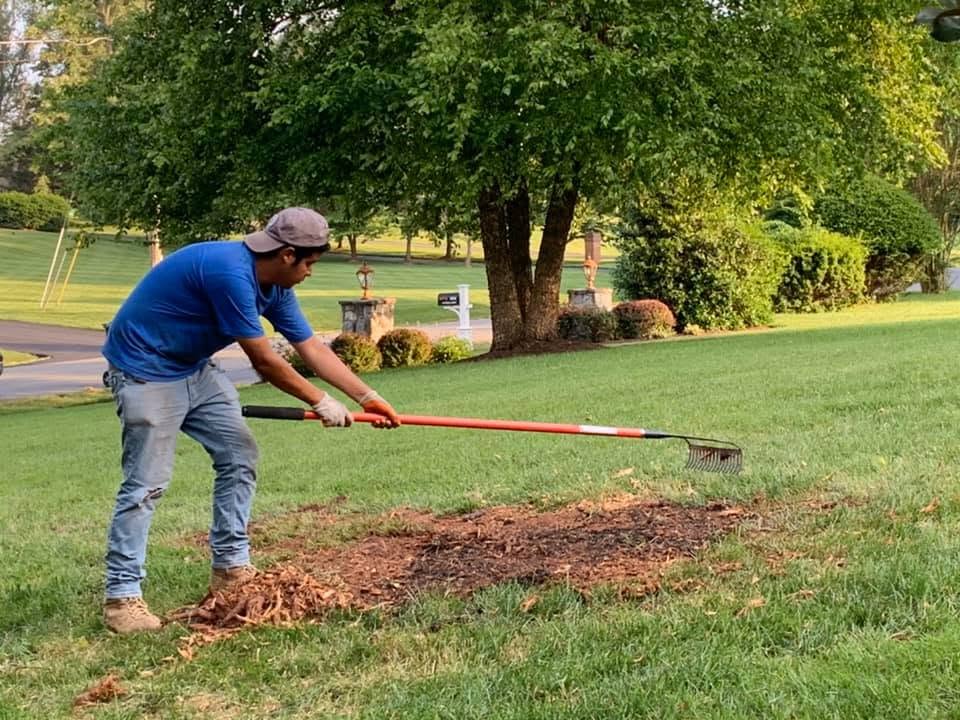
This covers the ongoing work that keeps a property looking cared for: edging, mulching, pruning shrubs, weeding beds, and general cleanup. Landscape maintenance in Ashburn is typically scheduled on a weekly or biweekly basis during the growing season, with reduced visits in fall and winter. What separates a good maintenance plan from a mediocre one is consistency. A crew that shows up on a predictable schedule catches small problems, like an early weed patch or a shrub that’s starting to overgrow a walkway, before they turn into bigger, more expensive fixes.
Seasonal Cleanups
Spring cleanups clear out debris, dead growth, and winter damage before the growing season starts. This is also the point where beds get edged, mulch gets refreshed, and any winter salt damage near driveways or walkways gets addressed. Fall cleanups focus on leaf removal, bed prep, and cutting back perennials so the yard heads into winter in good shape. Skipping a fall cleanup is one of the more common mistakes homeowners make, since a thick layer of wet leaves left on the lawn through winter can smother grass and create fungal issues that show up as dead patches the following spring.
Mulching and Bed Work
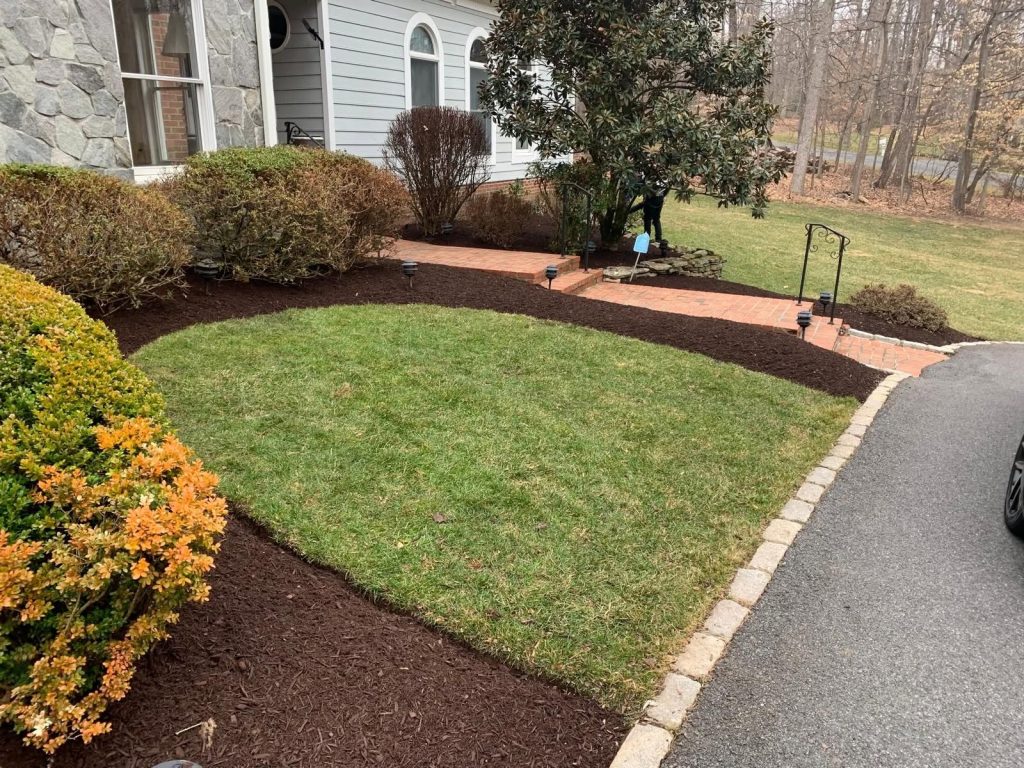
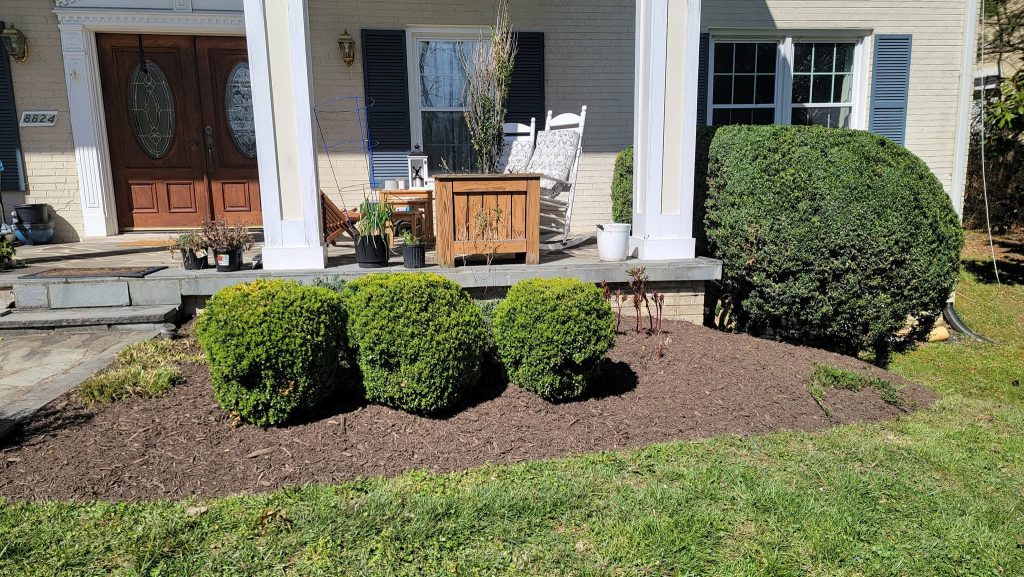
Fresh mulch does more than look good. It helps retain soil moisture, regulate soil temperature, and suppress weeds, which matters a lot given how quickly weeds spread in Ashburn’s clay soil during warm months. Mulch also breaks down over time, which means beds need a fresh layer applied at least once a year to keep doing their job. Beyond function, mulch color and edging style are often the first thing neighbors and HOA inspectors notice, so getting this detail right has a bigger visual impact than most homeowners expect.
Tree Care and Trimming
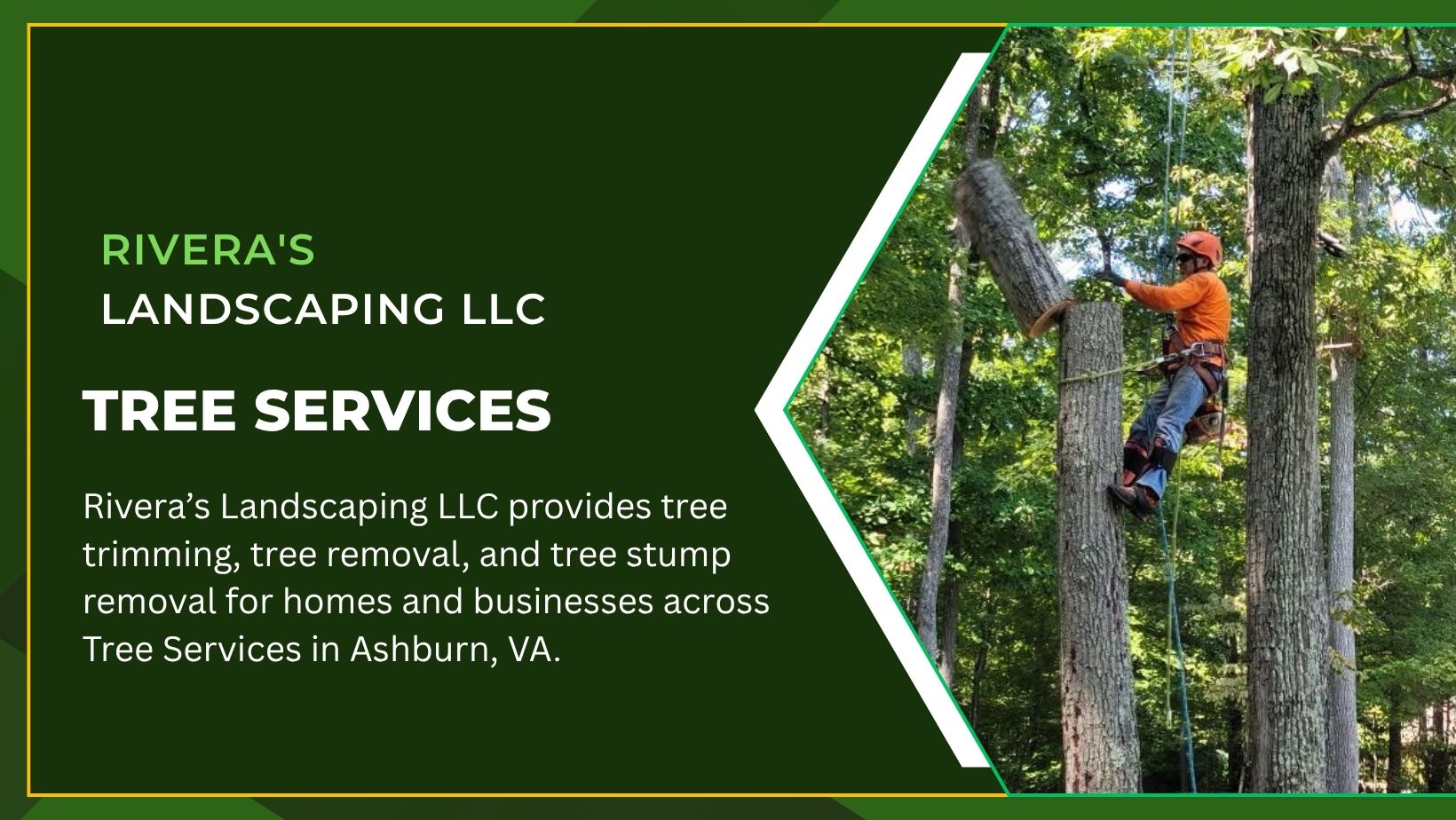
Overgrown or dead trees are both a safety hazard and a curb appeal issue. Professional tree trimming keeps branches away from rooflines and power lines while supporting the tree’s long-term health. In Ashburn specifically, storms and heavy winds are common enough that dead or weakened limbs pose a real risk to roofs, fences, and parked cars. Regular trimming also improves airflow and sunlight reaching the lawn underneath, which can make a noticeable difference in how well grass grows near mature trees.
Hardscaping and Yard Features
Patios, walkways, retaining walls, and drainage improvements fall under hardscaping. Given how much clay soil holds water after storms, proper grading and drainage work is often just as important as the visual upgrades. A patio installed without accounting for drainage can end up with standing water problems within a year or two, which is why experienced local crews usually start any hardscaping project by assessing how water moves across the property before laying down a single paver.
Local providers such as Rivera’s Landscaping LLC, based nearby in Herndon and serving Ashburn along with Reston, Leesburg, Great Falls, and McLean, typically bundle several of these services together, which is worth asking about when comparing quotes. Bundling not only tends to save money but also means one crew is responsible for the full picture of the property instead of coordinating separate contractors for lawn care, tree work, and cleanup.
What Landscaping Services in Ashburn Typically Cost
Pricing varies based on lot size, service frequency, and property condition, but homeowners generally have a rough idea of what to budget for once they understand the main cost drivers.
Weekly lawn mowing during the growing season typically falls somewhere between forty and seventy dollars per visit, depending on lot size and how much trimming or edging is included.
Full landscape maintenance visits, which usually bundle mowing with weeding, edging, and general bed care, tend to run between one hundred and three hundred dollars per visit for an average-sized residential lot. Seasonal cleanups, done twice a year in spring and fall, generally range from two hundred to six hundred dollars depending on how much debris and overgrowth has built up.
Mulching costs are usually calculated per cubic yard installed, and homeowners can expect somewhere between seventy-five and one hundred fifty dollars per yard depending on mulch type and bed size. Tree trimming is the most variable cost, since pricing depends heavily on tree size, number of branches being removed, and accessibility. Smaller trimming jobs might run one hundred fifty dollars, while larger or more complex jobs involving big shade trees can run several hundred dollars or more.
These figures are general ranges, not fixed quotes. Property size, accessibility, and how overgrown a yard has become all affect final pricing. A yard that hasn’t been maintained in a year will almost always cost more for the first cleanup than it will for ongoing maintenance afterward, simply because there’s more work involved in getting it back under control. Getting a walk-through estimate is always more accurate than a phone quote, since a landscaper can only judge soil condition, overgrowth, and drainage issues by actually seeing the property.
How to Choose a Landscaper in Ashburn
Not all landscaping companies operate the same way, and the difference shows up in the results. A few things worth checking before hiring anyone:
- Local experience. A landscaper who already works in Ashburn, Broadlands, or Brambleton understands the soil, climate, and HOA expectations without a learning curve, which usually means fewer surprises and faster turnaround on projects.
- Licensing and insurance. This protects the homeowner if equipment damages property or someone is injured on the job. Any reputable company should be able to provide proof of insurance without hesitation.
- Reviews from real customers. Look for consistent feedback about punctuality, communication, and whether the crew does what was promised. A handful of five-star reviews mean less than a steady pattern of positive feedback over time.
- Range of services. A company offering lawn care, tree work, and cleanup together can save time versus hiring separate contractors for each task, and it usually means better communication since one team understands the full property.
- Clear, written estimates. Vague pricing or verbal-only quotes tend to lead to disputes later. A written estimate that breaks down labor, materials, and scope of work protects both sides.
- Responsiveness before the job even starts. How quickly and clearly a company communicates during the quoting process is often a good indicator of how they’ll communicate once work is underway.
Rivera’s Landscaping LLC, for example, has built a track record on Yelp with customers praising the crew’s thoroughness and fair pricing, including cases where the team handled extra work beyond the original estimate at no added cost. One reviewer mentioned the removal of eight trees, including two large poplars, completed in under two days with clear communication throughout. That kind of consistency is a good sign when narrowing down options, since it points to a crew that stands behind its work rather than cutting corners once a job is underway.
Seasonal Landscape Maintenance Timeline for Ashburn
Timing matters more than most homeowners realize, and a lot of common lawn problems come down to doing the right task at the wrong time of year.
In spring, roughly March through May, the priority is cleanup and preparation. This means clearing winter debris, dethatching and aerating compacted soil where needed, applying pre-emergent weed control before crabgrass season starts, beginning regular mowing as growth picks up, and planting new shrubs or flowers while the soil is still workable and cool enough for roots to establish without heat stress.
Summer, from June through August, is about maintenance and protection rather than major projects. Grass should be mowed at a consistent, slightly taller height to shade the soil and reduce moisture loss. Watering should be deep and infrequent rather than light and daily, since shallow watering encourages shallow root systems that struggle during dry spells. This is also the season to watch for pest activity, particularly grubs and chinch bugs, which thrive in stressed lawns.
Fall, September through November, is arguably the most important season for long-term lawn health in this region. Overseeding thin or bare patches works best in early fall when soil is still warm, but air temperatures are cooling. Fertilizing during this window helps grass build strong root systems before winter dormancy. Leaves need to be removed regularly rather than left to pile up, and any summer-flowering shrubs should be pruned once they’ve finished blooming.
Winter, December through February, is the slower season, but it isn’t a time to ignore the yard entirely. Dormant pruning on trees is easier to do and easier on the tree when there’s no foliage in the way. It’s also a smart time to plan out any bigger landscaping projects for spring, request quotes, and address any vulnerable plants that need extra protection from hard freezes. Keeping walkways and driveways clear also prevents salt damage to nearby grass and garden beds.
Sticking to this kind of schedule, rather than reacting only when problems show up, is what separates a consistently healthy yard from one that’s always playing catch-up. Homeowners who wait until a lawn looks bad to start caring for it usually spend more money fixing problems than they would have spent preventing them in the first place.
Residential vs Commercial Landscaping in Ashburn
Homeowners generally need consistent lawn care, seasonal cleanup, and periodic upgrades like mulching or new plantings. The scope of work is usually predictable and centers around keeping a single property looking well-kept throughout the year.
Commercial properties, including office parks, HOAs, and retail centers around Ashburn’s Broadlands and Loudoun Station areas, usually need more frequent maintenance visits, larger crews, and strict adherence to appearance standards that affect tenant or customer impressions. A retail center with poorly maintained landscaping sends a very different message to customers than one with crisp edging, healthy plantings, and clean walkways. Commercial contracts also often involve coordinating around business hours, parking lot obstacles, and multiple stakeholders, which requires a different level of planning than a typical residential visit.
A landscaping company serving both markets typically has the equipment and crew size to handle larger properties without sacrificing the attention to detail that residential clients expect. This dual capability also tends to indicate a more established, better-equipped operation overall, since maintaining commercial contracts usually requires more consistent staffing and equipment investment than residential work alone.
Signs Your Yard Needs Professional Landscape Maintenance
Sometimes it’s obvious. Other times homeowners get used to a yard slowly declining without noticing how far it’s drifted from where it used to be. Common signs it’s time to call in help include grass that stays brown or patchy despite regular watering, weeds outcompeting the lawn in visible sections, mulch beds that have thinned out or grown weedy, trees or shrubs with dead branches or overgrown limbs near the house, standing water after rain that suggests a drainage issue, and a noticeable decline in curb appeal compared to neighboring properties.
Another sign that’s easy to overlook is soil compaction. If water pools on the surface instead of soaking in, or if it’s difficult to push a screwdriver a few inches into the lawn, the soil is likely too compacted for healthy root growth. This is extremely common in Ashburn given the clay content in local soil, and it’s usually fixed through core aeration rather than more watering or fertilizer, which is where many homeowners waste time and money without solving the actual problem.
Catching these early usually costs less to fix than waiting until the yard needs a full renovation. A lawn that’s caught early might only need aeration and overseeding, while one that’s been neglected for a few seasons might require full sod replacement, which costs significantly more.
Final Thoughts
Rivera’s Landscaping LLC Ashburn’s mix of clay soil, seasonal weather swings, and HOA standards makes landscaping a bit more involved than in other parts of the country. Working with a landscaper who already understands these local conditions, and who offers a full range of services from mowing to tree care to seasonal cleanup, tends to save homeowners both money and frustration over time. Instead of chasing problems after they show up, a consistent maintenance plan built around the local climate and soil keeps a property looking its best year-round.
If you’re ready to get your yard back on track, reaching out to a local provider like Rivera’s Landscaping LLC at (703) 927-9475 is a straightforward way to get a real quote based on your property, not a generic estimate pulled from a website form.
FAQ’s
How much do landscaping services cost in Ashburn, VA?
Costs vary by service and property size. Weekly mowing typically runs $40 to $70 per visit, while full landscape maintenance can range from $100 to $300 per visit depending on lot size and scope of work.
What is included in landscape maintenance?
Landscape maintenance usually includes mowing, edging, weeding, mulching, pruning, and general bed cleanup. Some companies also include seasonal services like fall leaf removal or spring cleanup as part of a maintenance plan.
How often should my lawn be mowed in Ashburn, VA?
During the growing season, weekly mowing is standard for most lawns. In cooler months, mowing frequency typically drops to every two to three weeks depending on grass growth.
Do I need a licensed landscaper in Virginia?
Virginia doesn’t require a special state license for basic landscaping and lawn care, but reputable companies still carry general liability insurance. Always confirm insurance coverage before hiring.
When is the best time for a landscaping cleanup in Ashburn?
Spring and fall are the two key cleanup windows. Spring cleanup clears winter debris and preps beds for growth, while fall cleanup focuses on leaf removal and getting the yard ready for winter.
Can landscaping companies handle both residential and commercial properties?
Many local landscaping companies serve both markets, though commercial properties often need more frequent visits and larger crews to maintain appearance standards across bigger spaces.